


The sign of the cross is one of the oldest physical gestures of Christian prayer. Christians were making the sign of the cross by at least the second or third century, and perhaps earlier. Over time, the gesture became a familiar part of Christian worship and devotion, particularly in the Western Church. Its meaning is wonderfully simple: with the thumb and fingers, one traces a cross over the body—traditionally from forehead to chest, and from left shoulder to right shoulder in the Western tradition—while saying, either aloud or silently, “In the name of the Father, and of the Son, and of the Holy Spirit. Amen.” The gesture is therefore both a reminder of the cross of Christ and a bodily confession of the Triune God into whose name we have been baptized.
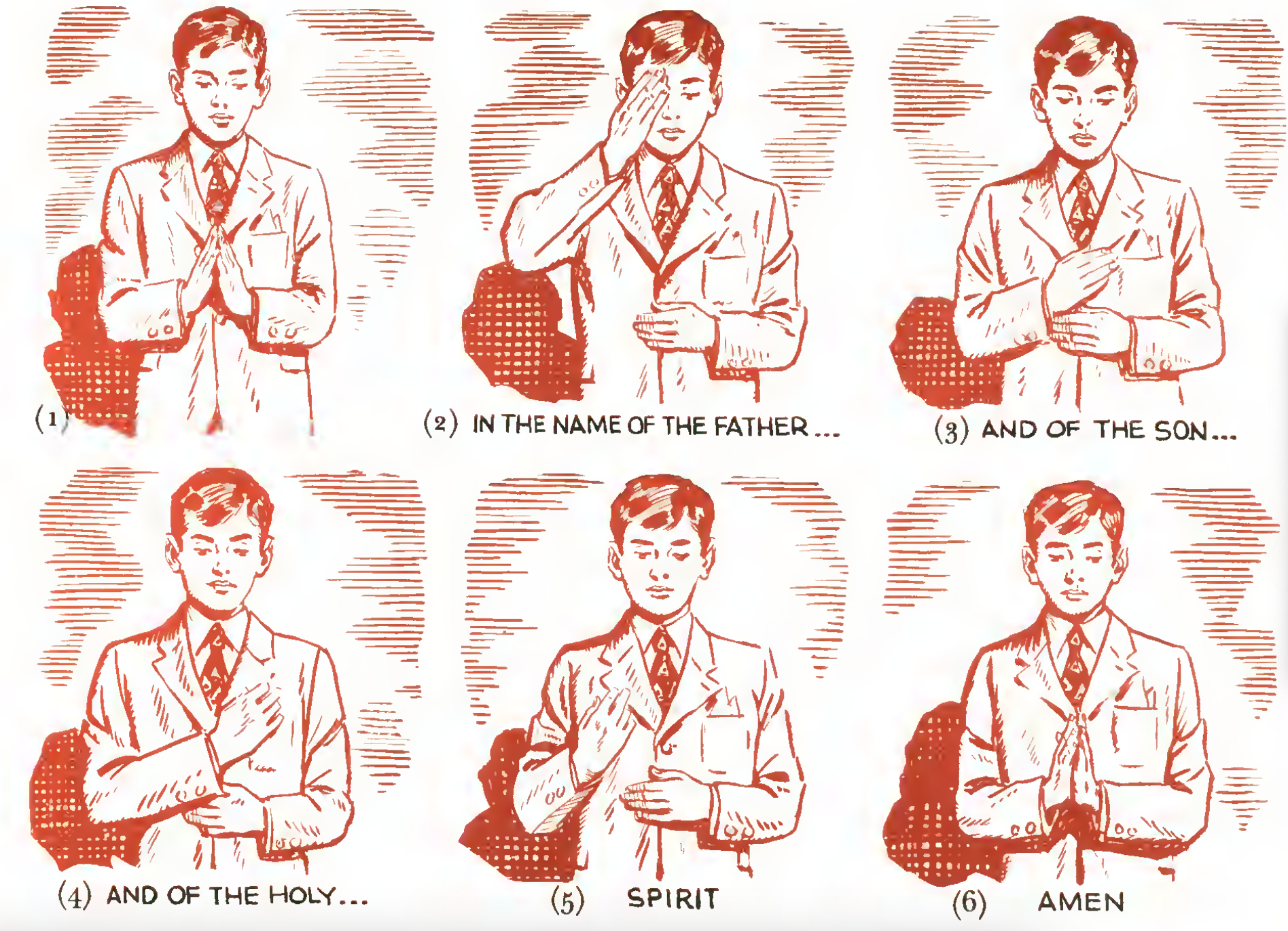
There is no single moment in the Prayer Book liturgy when it is required either for clergy or laity to make the sign of the cross (with the exception of the sign being made on the forehead of the recently baptized). Rather, it has traditionally been used at moments when the cross, Christ’s blessing, or some particular act of faith is being brought to mind. During the service, you may see people make the sign of the cross during the absolution, at the words of the Creed concerning the resurrection, at the consecration, when receiving the bread and wine, or at the dismissal. Some Christians make it frequently throughout the day; others rarely or never do. None of these practices is a measure of how seriously someone takes the Christian faith.
At its best, I think the sign of the cross is simply a physical manifestation of an inward attitude toward God. We already understand this instinctively when we kneel to pray: our posture does not make our prayer more effective, but our bodies can help express what our hearts are doing. The same can be true of the sign of the cross. It can be a physical way of saying, “I belong to Christ,” “I trust Jesus who died on the cross” or simply, “I remember that Christ is for me.” That is why I use it at the absolution and at the blessing at the end of the communion service. I don’t regard the gesture as necessary, and I don’t think Christians who don’t use it are somehow missing something. But for those who find that a physical gesture helps them pray, the sign of the cross can be a small and ancient way of bringing body and soul together in the worship of God.
Leave a Reply